
Kitchen Appliances Worth Buying — and the Ones That Don't
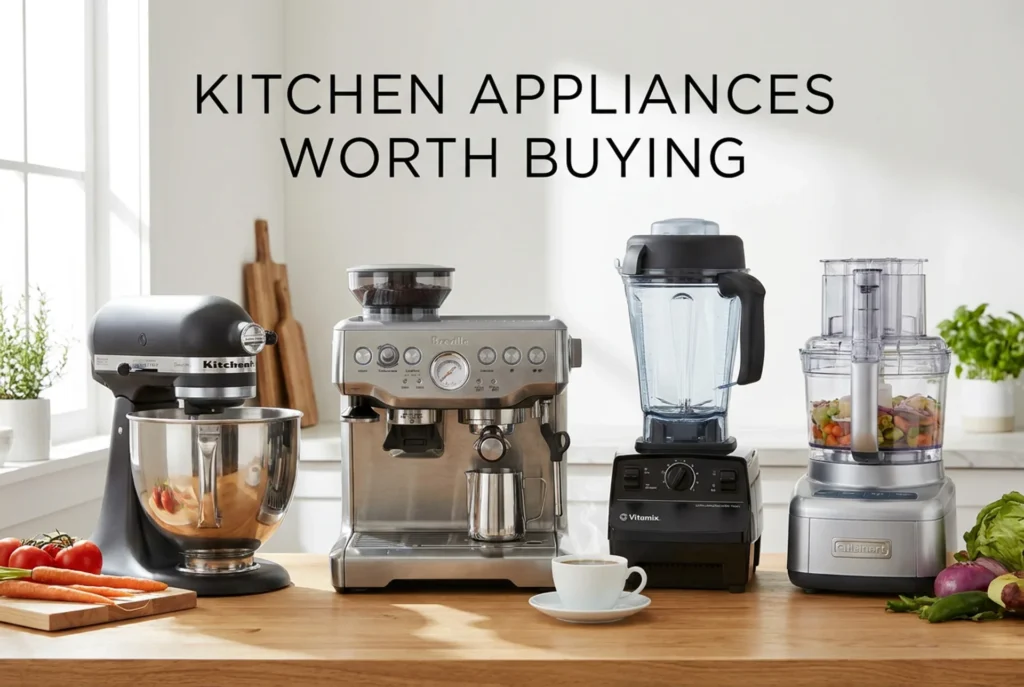
Kitchen appliance marketing is relentless. The result: most kitchens contain at least three gadgets gathering dust on a shelf, purchased with enthusiasm and used twice. Here’s how to tell the difference between a genuine upgrade and a counter-clutter purchase.
The Framework: Three Questions Before You Buy
Before purchasing any kitchen appliance, answer three questions honestly: How often will you actually use this, in a typical week? Does it replace a task that currently takes significant time or skill? And would it make cooking something you avoid because it’s too difficult genuinely accessible? If the answer to two of three is yes, it’s likely a worthwhile purchase. If not, reconsider.
Genuinely Worth the Counter Space
- Stand mixer: If you bake bread or cakes more than twice a month, a stand mixer transforms your kitchen. Ten minutes of hand kneading becomes two minutes of supervision. It also functions as a food processor with the right attachments, and the base unit lasts decades if maintained.
- Immersion (stick) blender: One of the highest utility-to-price-to-footprint ratios of any kitchen tool. Blends soups directly in the pot, makes dressings, purees, and smoothies in seconds, and stores in a drawer. No separate jug, no transfer of hot liquid. A must-have.
- Electric kettle: Boils water three times faster than a stove element and automatically shuts off. Temperature-controlled models are worth the premium for tea drinkers — different teas require different temperatures, and boiling-point water burns green tea and white tea, making them bitter.
- Rice cooker: Perfect rice, every time, without any attention. Set it and it switches to warm when done. Particularly useful if you cook rice several times per week — it frees a burner and removes timing pressure from the rest of the meal.
- Food processor: Transforms time-consuming prep tasks: slicing, shredding, chopping, mixing pastry, making breadcrumbs. The key is the size — buy one large enough for your household (at least 2.5L for a family), or you’ll spend time doing two batches.
When researching appliances, ignore the number of features and focus on the quality of the core function. A blender that blends exceptionally well beats one with eleven speed settings that produces mediocre results. Read reviews from people who have used the appliance for a year, not just unboxing reactions.
Situationally Useful
- Air fryer: Excellent for reheating foods that become soggy in a microwave (chips, fried chicken, pizza), and genuinely good for cooking certain foods quickly with less oil. Less useful if you already own a good oven with a convection fan. Worth buying if you’re a single person or couple cooking for one or two.
- Slow cooker: Ideal for people who leave the house early and want dinner ready when they return. Set it in the morning, eat in the evening. Particularly suited to stews, chillies, pulled meats, and soups. If your lifestyle fits, it’s invaluable; if you’re home while cooking, a Dutch oven does the same job better.
- Pasta machine: If you make fresh pasta, this is a significant quality upgrade. If you only make it occasionally, the investment is hard to justify — good dried pasta is excellent. Worth it for dedicated enthusiasts.
Usually Not Worth It
| Appliance | The Problem | Better Alternative |
|---|---|---|
| Egg cooker | A pot of water does the same job | Saucepan + timer |
| Single-use sandwich maker | Used twice, then forgotten | A heavy pan with a lid |
| Spiraliser (standalone electric) | Manual versions cost €15 and take the same time | Manual spiraliser |
| Dedicated pancake maker | A non-stick pan is superior | 20cm non-stick pan |
| Mini waffle iron | Low frequency of use, hard to clean | Saved for a café visit |
The One Rule That Applies to Everything
Buy fewer appliances, better. A high-quality blender that you use every day is worth more than four cheap gadgets that sit on the shelf. Counter space is finite and valuable — treat it accordingly. If you genuinely cannot find space for an appliance in your kitchen, that’s a signal that you don’t actually need it.
The best-equipped kitchens are not the ones with the most gadgets. They are the ones where every tool has a clear purpose, earns its place through regular use, and performs its function well. Buy less, buy better, and your kitchen will reward you every day.
- info@compraveloce.com