
How to Meal Prep Like a Pro: Save Time, Eat Better, Waste Less
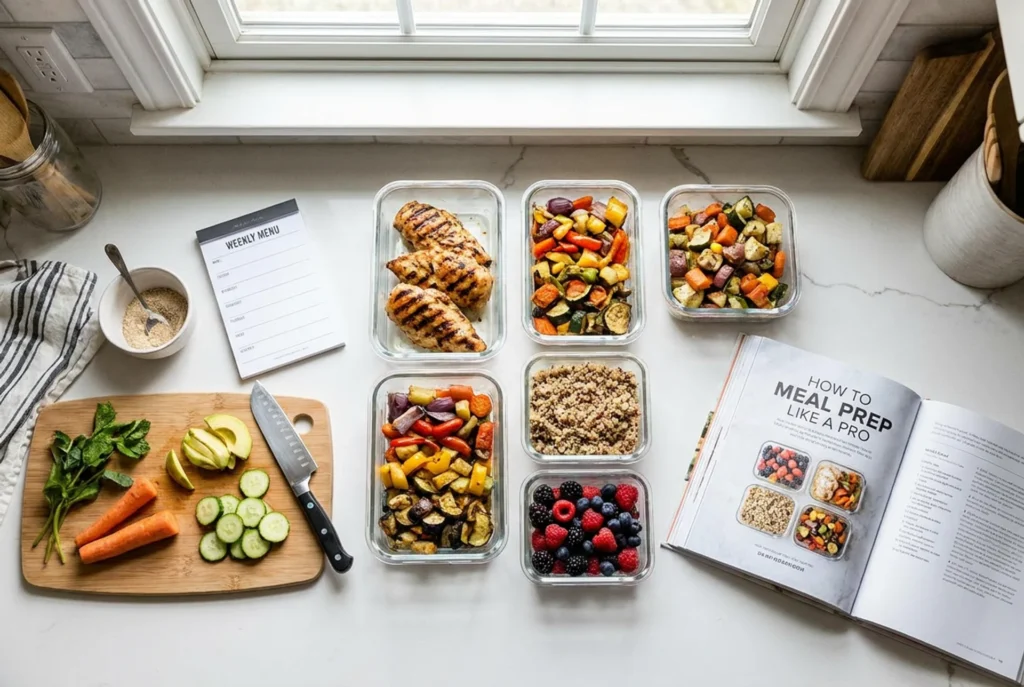
Meal prepping is not about eating the same sad container of rice and chicken five days a week. Done well, it’s a system that gives you home-cooked food every day with a fraction of the daily effort — and dramatically less food waste.
The Core Principle: Prep Components, Not Complete Meals
The biggest mistake beginners make with meal prep is cooking five identical complete meals on Sunday and eating them mechanically through the week. By Wednesday, the repetition kills motivation and the food quality has noticeably declined.
The professional approach is different: prepare versatile building blocks — cooked grains, roasted vegetables, a protein, a sauce or two — and combine them differently each day. The same roasted chicken can be a grain bowl Monday, a salad Tuesday, a pasta Wednesday, and a wrap Thursday. You’ve done the work once; the variety comes from the assembly.
What to Prep
- A grain: Cook a large batch of rice, quinoa, farro, or pasta at the start of the week. These form the base of almost any meal and keep refrigerated for 4–5 days.
- Roasted vegetables: Two trays of seasonal vegetables (e.g. sweet potato, courgette, red pepper, broccoli) take 30 minutes to roast and can go into salads, grain bowls, pasta, omelettes, and wraps throughout the week.
- A protein: Baked chicken thighs, a batch of cooked legumes (chickpeas, lentils), or hard-boiled eggs. Proteins keep 3–4 days refrigerated.
- A sauce or dressing: One well-made sauce transforms simple components into a satisfying meal. A tahini dressing, a simple vinaigrette, or a roasted tomato sauce all keep 5–7 days in the fridge.
- Washed and prepped fresh vegetables: Wash and dry salad leaves, cut crudités, and portion fresh vegetables. Having them ready removes the main friction point of eating vegetables daily.
Sample Week of Meal Prep — 2 Hours on Sunday
- 500g quinoa, cooked
- 2 trays roasted vegetables
- 8 chicken thighs, baked
- 400g chickpeas, drained and roasted
- Tahini dressing (double batch)
- Tomato sauce (600ml)
- Salad leaves, washed and dried
- Mon:Grain bowl — quinoa + veg + chicken + tahini
- Tue:Chicken salad + leaves + dressing
- Wed:Pasta (fresh cook) + tomato sauce + chickpeas
- Thu:Roasted veg wrap + leftover chicken
- Fri:Chickpea and grain salad + tahini
The Equipment That Makes It Easier
Meal prep doesn’t require specialist equipment, but a few tools make the process significantly faster and more pleasant:
- A large sheet pan (or two): Roasting two trays of vegetables simultaneously halves your oven time. A half-sheet pan (46 x 33cm) is the ideal size for most home ovens.
- A rice cooker or instant pot: Set the grain cooking while you focus on proteins and vegetables. Automated cooking removes the risk of burnt grain on the stovetop and frees your attention.
- Glass storage containers: Glass is preferable to plastic — it doesn’t absorb odours, is microwave-safe, and you can see the contents at a glance. Invest in a set of uniform sizes that stack neatly.
- A good chef’s knife: Most of your prep time is spent chopping. A sharp 20cm chef’s knife reduces chopping time by 40% compared to a dull one and is far safer to use.
- A food processor: For high-volume prep (slicing a kilogram of vegetables, making a large batch of sauce), a food processor is a genuine time-saver.
Label everything with the date. Store cooked proteins for a maximum of 4 days, cooked grains for 5 days, roasted vegetables for 5 days, and dressings for up to 7 days. Keep dressings separate from salads until serving to prevent wilting. When in doubt, freeze — most prepped components freeze well and extend your prep across two weeks.
Reducing Food Waste Through Better Planning
The average European household wastes roughly 20% of the food it purchases — primarily fresh produce that spoils before it’s used. Meal prep is the single most effective counter-measure because it commits ingredients to a purpose before they have the chance to go bad.
The key habit: before shopping, audit what’s already in the fridge and build that week’s prep around it. Half a head of cauliflower, some leftover herbs, and a tin of beans are the starting point for a prep list, not things to work around. This approach typically reduces grocery spending by 15–25% in addition to reducing waste.
Starting Small
If you’ve never meal prepped before, don’t attempt a full week of components on your first session. Start with one element: cook a large batch of grain, or roast two trays of vegetables. Use that as a base for three meals during the week. Once that habit is established, add a second component. Build gradually until the system fits naturally into your week.
The two hours you spend prepping on Sunday return to you as 30 minutes per day for the rest of the week — time you would otherwise spend deciding what to eat, shopping impulsively, or ordering delivery. Meal prep is not about restriction. It is about giving yourself the option to eat well, effortlessly, every day.
- info@compraveloce.com